There’s a reason you can eat an entire bag of chips without feeling full, then find yourself staring into the refrigerator twenty minutes later. It’s not a lack of willpower. It’s not a character flaw. It’s food science — specifically, decades of sophisticated research by the food industry into the exact combinations of salt, fat, sugar, and texture that make the human brain’s reward system override its satiety signals.
Ultra-processed foods don’t just taste good. They are engineered to be neurologically irresistible — designed in industrial food laboratories to target your dopamine system with a precision that natural foods cannot match. Understanding the neuroscience of how this works is the first step to reclaiming your brain’s relationship with food.
What Makes Food “Ultra-Processed”?
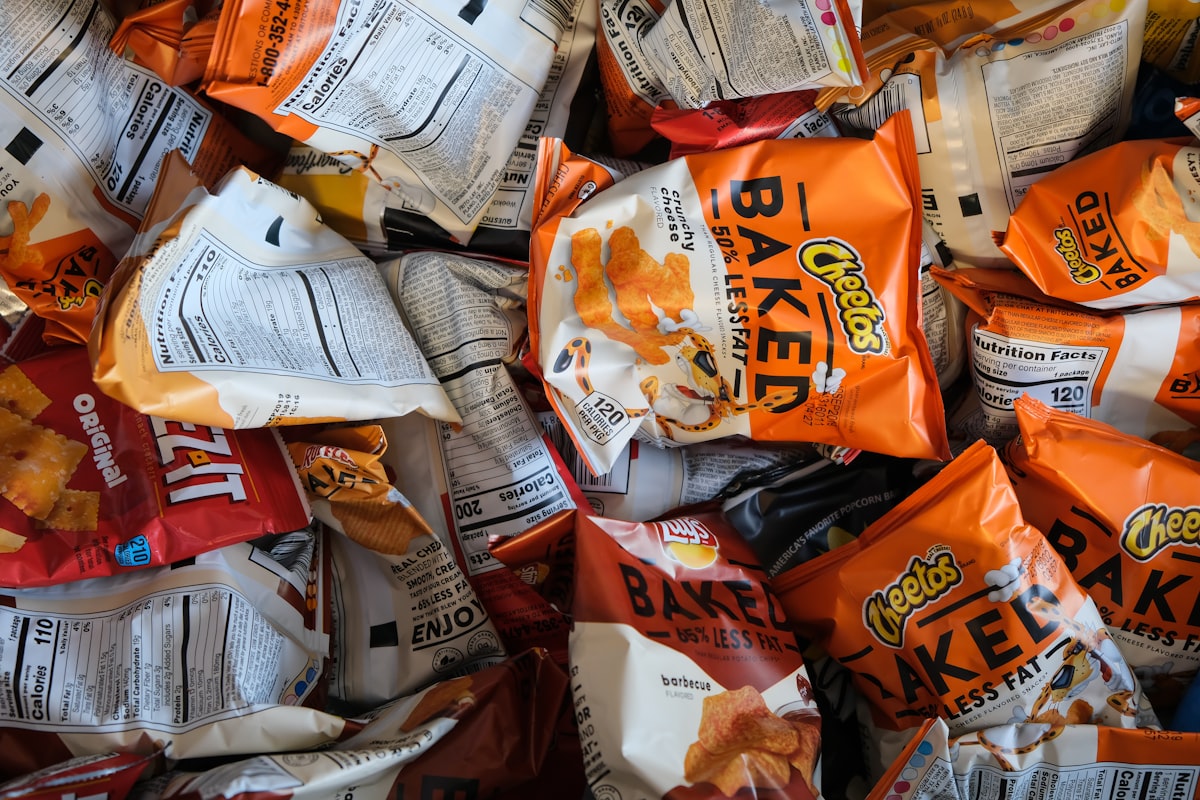
The term “ultra-processed” comes from the NOVA classification system developed by Brazilian researchers. It refers to foods that have been industrially manufactured using ingredients rarely used in home cooking — emulsifiers, artificial flavors, modified starches, hydrogenated oils, high-fructose corn syrup — and are typically ready-to-eat or ready-to-heat. Think packaged snacks, fast food, breakfast cereals, sodas, flavored yogurts, processed meats, and most things sold in bags or boxes with a long ingredient list.
These foods now account for more than 60% of calories consumed in the United States and approximately 50% in many European countries. In the last fifty years, as ultra-processed food consumption has risen, rates of obesity, metabolic disease, depression, and ADHD have climbed in near-perfect parallel — a correlation that is increasingly being explained through neuroscience.
The NOVA Classification in Practice
A banana is minimally processed. Dried banana chips with added sugar are processed. A banana-flavored snack bar made with artificial flavors, high-fructose corn syrup, palm oil, and seven types of emulsifier is ultra-processed. The distinction isn’t just about nutrients — it’s about how the food interacts with your digestive system, your gut microbiome, and ultimately your brain. Understanding this helps explain why calorie-for-calorie, ultra-processed foods produce different physiological and psychological effects than whole foods.
The Bliss Point: Food Science’s Most Dangerous Concept
In the 1970s, a food scientist named Howard Moskowitz pioneered what he called “optimizing” food products for maximum appeal. Working initially for the U.S. Army and later for major food companies, he discovered that there is a precise concentration of sugar, fat, and salt at which human sensory pleasure is maximized — a level he called the “bliss point.” Below it, the food tastes flat. Above it, it tastes too intense, even unpleasant. At the bliss point, the food triggers the strongest possible positive sensory signal — and the weakest satiety response.
This was not an accident or a side effect. It was the goal. Modern processed food is engineered to sit exactly at the bliss point — delivering maximum reward signal while simultaneously suppressing the physiological systems that would normally tell you to stop eating.
Why Natural Foods Have Limits
In nature, the foods with the highest caloric density — ripe fruit, honey, fatty animal foods — contain fiber, water, or structural complexity that slows consumption and triggers satiety signals. An apple’s sugar is bound in a cellular matrix. Wild game is lean. Honey requires work to obtain. Evolution designed the human brain’s reward response to scale with the caloric and nutritional value of natural foods — a calibration that worked reasonably well for hundreds of thousands of years.
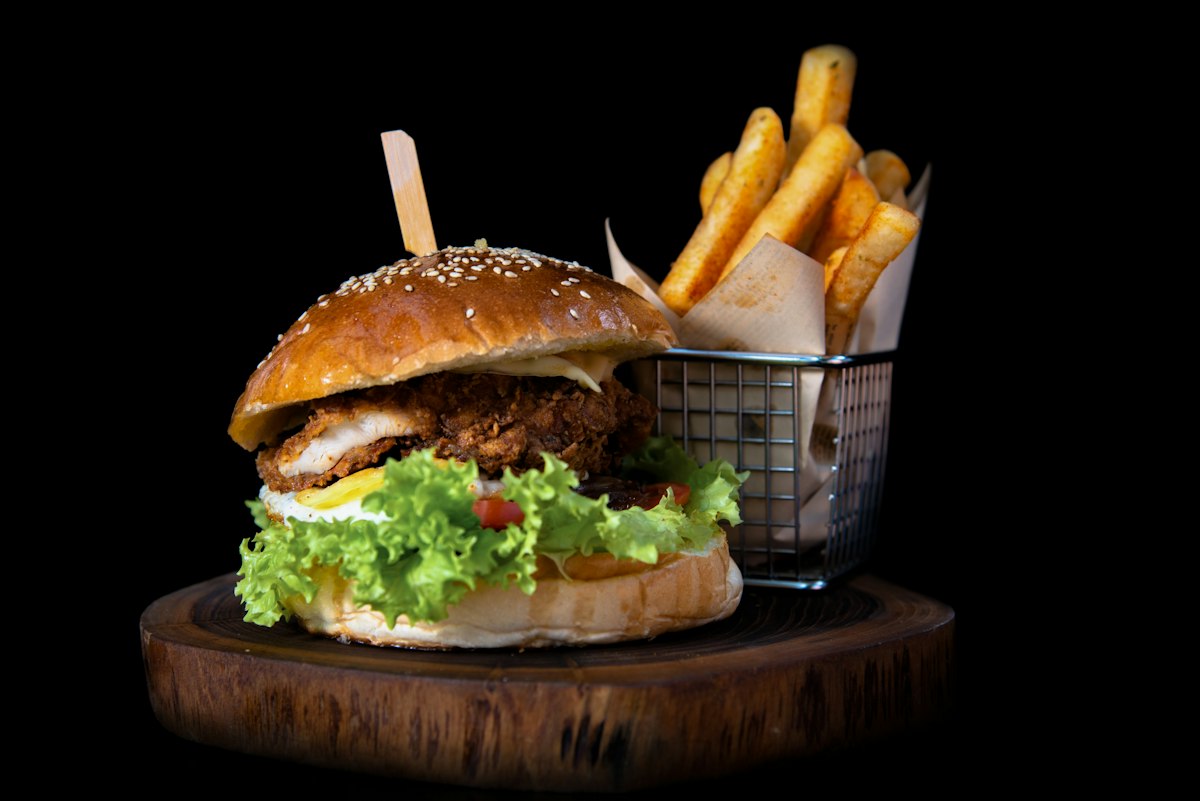
Ultra-processed food breaks this calibration entirely. It delivers concentrated sugar, fat, and salt in combinations and textures that don’t exist in nature, stripped of the fiber and water that would trigger fullness, hitting the reward system at intensities that evolution never prepared humans to encounter.
How Ultra-Processed Food Hijacks Your Dopamine System
The key to understanding why ultra-processed food overrides willpower lies in how it interacts with the brain’s dopamine reward system — the same system targeted by addictive drugs. When you eat something pleasurable, your nucleus accumbens releases dopamine, creating a signal of reward that motivates you to repeat the behavior. This is the foundation of all reward-motivated behavior.
Ultra-processed foods — particularly those combining fat and sugar in novel ways (a combination that barely exists in natural foods) — trigger dopamine release at levels comparable to addictive substances. A 2011 brain imaging study using fMRI found that milkshakes activated the same neural reward circuitry as cocaine — the caudate nucleus, the nucleus accumbens, the ventral tegmental area — and that individuals who ate more fast food showed blunted dopamine responses over time, requiring more stimulation to achieve the same reward signal. This is the neurological definition of tolerance, and it mirrors addiction.
The Crash and the Craving Cycle
The dopamine spike triggered by ultra-processed food is brief and followed by a rapid decline. As dopamine levels fall below baseline — a phenomenon called dopamine “dipping” — the brain interprets this as a signal of need, generating a craving for another reward hit. This is why you can consume an entire serving of chips or cookies and feel an urge to continue eating shortly after finishing. The food hasn’t made you full; it’s created a dopamine deficit that registers as hunger.
Over time, regular ultra-processed food consumption downregulates D2 dopamine receptors in the striatum — the brain becomes less sensitive to dopamine. This makes whole, natural foods less rewarding by comparison, creates an escalating need for more highly stimulating foods to achieve the same satisfaction, and contributes to the emotional flatness and mild anhedonia many people report when eating poor-quality diets. For more on how the dopamine system drives compulsive behavior, see our deep dive on digital dopamine and how smartphone addiction rewires the reward system.
The Gut-Brain Axis: The Second Attack Vector
The dopamine system is only the first mechanism through which ultra-processed food disrupts brain function. The second is the gut-brain axis — the bidirectional communication network linking your digestive system and microbiome to your brain via the vagus nerve, enteroendocrine cells, and immune signaling pathways.
Ultra-processed foods devastate the gut microbiome. They are low in fiber (the primary food source for beneficial gut bacteria), high in emulsifiers (which damage the mucus layer protecting the gut lining), and often contain artificial sweeteners (which alter microbial composition even in small doses). The result is gut dysbiosis — an imbalance in the microbial community that has profound effects on brain chemistry.
Approximately 95% of the body’s serotonin — the neurotransmitter most associated with mood stability and wellbeing — is produced in the gut, with production directly influenced by microbial activity. A disrupted microbiome produces less serotonin, more inflammatory signaling molecules, and altered production of short-chain fatty acids that regulate neuroinflammation. This is why diets high in ultra-processed foods are strongly associated with depression and anxiety — not just through nutrient deficiency, but through active disruption of gut-brain chemistry. We covered this in detail in our piece on the gut-brain connection and how your microbiome runs your mind.
Neuroinflammation: The Hidden Driver
Ultra-processed diets trigger systemic inflammation through multiple pathways: gut permeability (“leaky gut”) allowing bacterial products into the bloodstream, oxidative stress from refined seed oils and advanced glycation end-products (AGEs), and microbiome disruption reducing anti-inflammatory short-chain fatty acid production. This systemic inflammation crosses the blood-brain barrier and activates microglia — the brain’s immune cells — producing neuroinflammation.
Neuroinflammation impairs cognitive function, reduces neuroplasticity, disrupts sleep architecture, and is now recognized as a major contributing factor to depression, anxiety, and cognitive decline. A 2022 meta-analysis of 17 studies found that ultra-processed food consumption was associated with a 48-53% increased risk of anxiety and depression — an effect size that rivals many known environmental risk factors for mental illness. This connects directly to what we know about how chronic stress and inflammation rewire the brain.
Ultra-Processed Food and Cognitive Performance
Beyond mood, ultra-processed food consumption has measurable effects on cognitive performance — attention, working memory, executive function, and processing speed.
The Glucose Roller Coaster
Ultra-processed foods are typically high in rapidly digestible carbohydrates with a high glycemic index — they spike blood glucose quickly and precipitously. The brain is exquisitely sensitive to glucose fluctuations. After the initial spike, insulin-driven glucose clearance creates a relative hypoglycemia — a crash that manifests as brain fog, difficulty concentrating, irritability, and fatigue. This is the post-lunch cognitive slump familiar to anyone who has eaten a processed carbohydrate-heavy meal.
Chronic high-glycemic diets are associated with reduced BDNF (brain-derived neurotrophic factor), the growth protein essential for neuroplasticity and memory formation. Lower BDNF correlates with reduced hippocampal volume — the brain structure most critical for learning and memory, and most vulnerable to aging-related cognitive decline. Our post on what attention neuroscience says about deep work and focus explores how cognitive performance is shaped by neurochemical factors like these.
The ADHD Connection
The relationship between ultra-processed food and ADHD symptoms is increasingly well-documented. Several mechanisms appear to be at play: dopamine receptor downregulation (which exacerbates the reward-processing deficits central to ADHD), omega-3 deficiency (processed foods are typically deficient in the DHA essential for prefrontal cortex function), and gut microbiome dysbiosis (which alters neurotransmitter production and inflammatory signaling relevant to attention regulation). For a deep understanding of the neuroscience of attention disorders, see our article on adult ADHD and how the brain works differently.
Why “Just Eat Less” Doesn’t Work: The Willpower Myth
The dominant cultural narrative around diet failure is one of personal weakness — insufficient willpower, lack of discipline, poor character. This narrative is not only psychologically harmful; it is neurobiologically wrong.
Willpower — the prefrontal cortex’s ability to override impulses from the limbic system — is a limited, depletable resource. It is also asymmetrically matched against food industry engineering. The prefrontal cortex developed over millions of years to manage social behavior and long-term planning. The dopamine reward system developed over hundreds of millions of years as an essential survival mechanism. Ultra-processed food engineers have spent decades perfecting how to maximize the activation of that ancient, powerful system.
This is not a fair fight. As neuroscientist and addiction researcher Anne Lembke has noted, the food environment we have created is fundamentally incompatible with the brain’s evolved regulatory systems. Asking individuals to exercise willpower against billion-dollar food engineering is structurally similar to asking someone to exercise willpower against an IV drip of dopamine. Our piece on the willpower paradox and the neuroscience of self-control explains why fighting cravings directly is rarely the most effective strategy.
How to Recalibrate Your Brain’s Reward System
The encouraging finding from neuroscience is that the brain’s reward system is plastic — it can recalibrate. The dopamine receptor downregulation caused by chronic ultra-processed food consumption reverses with dietary change, though it takes time. Research suggests meaningful recalibration occurs over 4-8 weeks of reduced ultra-processed food intake.
The Dopamine Reset Approach
The most evidence-supported strategy for recalibrating food reward is progressive reduction rather than abrupt elimination. Studies show that cold-turkey elimination of ultra-processed foods often produces intense cravings and high relapse rates — partly because the dopamine system interprets sudden reward reduction as deprivation, triggering compensatory craving signals. Gradual replacement of ultra-processed foods with whole food alternatives allows D2 receptor sensitivity to recover incrementally, making natural foods progressively more rewarding as the recalibration proceeds.
Prioritizing Gut Recovery
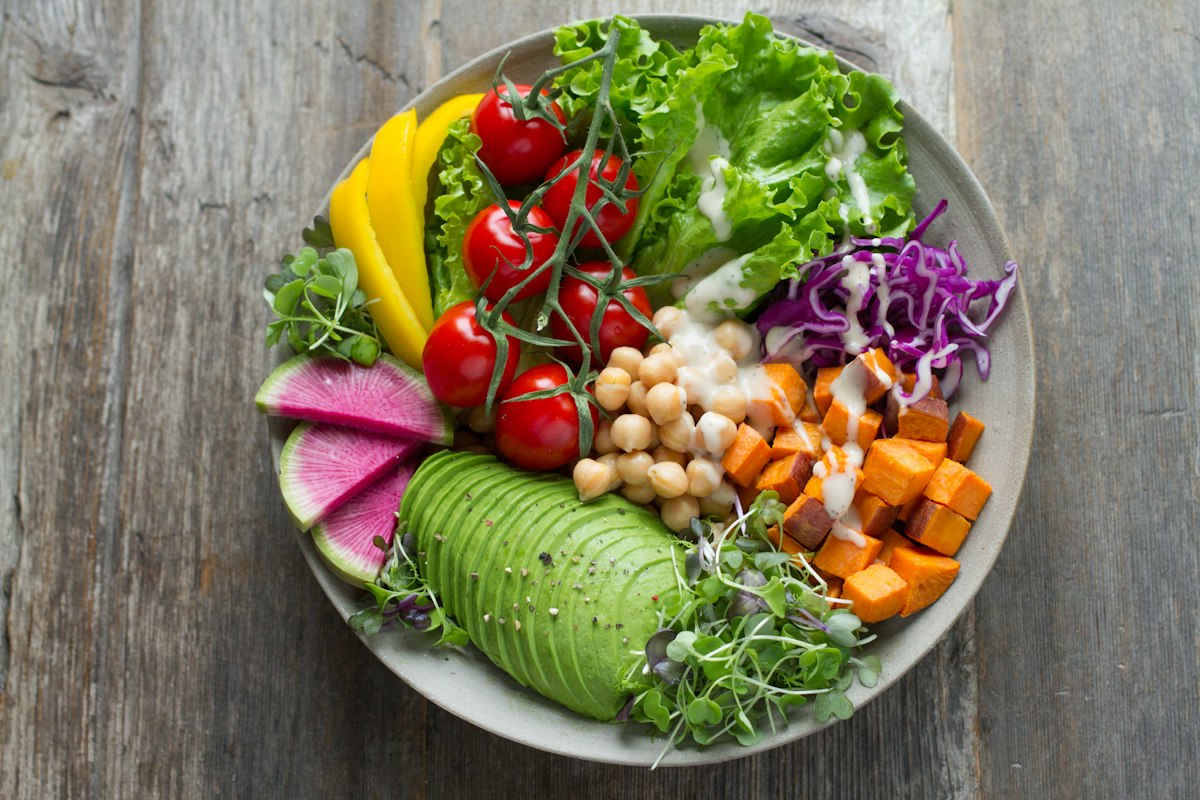
Since much of ultra-processed food’s brain impact is mediated through the gut microbiome, gut recovery should be a parallel priority. This means increasing dietary fiber (ideally from diverse plant sources — variety matters for microbiome diversity), adding fermented foods (yogurt, kefir, kimchi, sauerkraut), and reducing emulsifiers and artificial additives. Microbiome diversity can begin improving within days of dietary change, with more substantial shifts occurring over weeks. Sleep is also a powerful regulator of both gut health and appetite hormones — poor sleep dramatically increases ultra-processed food cravings the following day. Our post on the science of sleep optimization covers this in detail.
Environmental Design Over Willpower
Given the neurological evidence that willpower is outmatched against engineered food reward, the most effective dietary strategy is to minimize reliance on willpower by changing the environment. Research consistently shows that food availability is the strongest predictor of consumption — people eat what is physically present and convenient. Removing ultra-processed foods from the home environment reduces consumption far more reliably than resolve to resist them. The habit research on building behaviors that stick shows how environment design systematically reduces friction for healthy choices while increasing friction for unhealthy ones.
The Bigger Picture: A Food Environment Problem
The neuroscience of ultra-processed food is ultimately not just a personal health story — it is a structural one. When more than 60% of a population’s calories come from products engineered to override satiety and maximize dopamine response, the resulting epidemic of obesity, metabolic disease, depression, and cognitive decline cannot be meaningfully addressed through individual willpower alone.
What the brain science reveals is that ultra-processed food consumption is not primarily a choice problem — it is a design problem. The foods are designed to be neurologically compelling beyond what the human regulatory system can reliably resist at scale. This is why policy approaches — food labeling, marketing restrictions, subsidies for whole foods, reformulation requirements — are increasingly seen by public health researchers as essential complements to individual dietary education.
For now, the most powerful thing you can do is understand the mechanism. When you feel the pull toward engineered food, you are experiencing the output of a sophisticated dopamine manipulation system — not a personal failing. That recognition doesn’t make the pull disappear, but it does change the relationship to it. And paired with environmental design, gut repair, and gradual reward recalibration, it provides a neurobiologically sound foundation for changing your food relationship in a lasting way.