Blog

  • Why Consistency Beats Intensity in Personal Growth

    Many people believe progress comes from intense effort.
    Working harder. Pushing longer. Doing more in less time.

    In reality, intensity creates spikes, while consistency creates trajectories.

    This article explains why consistency consistently outperforms intensity when it comes to personal growth, productivity, and long-term results.


    Intensity Feels Productive, But Itโ€™s Fragile

    High-intensity effort often looks impressive:

    • Long work sessions
    • Aggressive goal setting
    • Sudden lifestyle overhauls

    The problem is sustainability.

    Intensity relies on:

    • High energy
    • High motivation
    • Favorable conditions

    When any of these disappear, progress stops. What feels powerful in the short term becomes unstable over time.


    Consistency Compounds Quietly

    Consistency works differently.
    It produces results that are almost invisible at first, then difficult to ignore later.

    Small actions repeated daily:

    • Reduce decision fatigue
    • Lower mental resistance
    • Create automatic behavior loops

    This is how habits turn into identity.

    If you havenโ€™t read the foundation behind habit formation yet, start here:
    ๐Ÿ‘‰ https://ootssu.com/how-to-build-better-daily-habits-without-relying-on-motivation/


    Why the Brain Prefers Consistency

    From a cognitive perspective, the brain favors predictability.

    Repeated actions:

    • Require less energy
    • Trigger fewer stress responses
    • Become default behaviors

    In contrast, intense effort demands constant self-control, which is a limited resource.

    This is closely related to how decision fatigue undermines performance, explained in detail here:
    ๐Ÿ‘‰ https://ootssu.com/better-everyday-decisions/


    Consistency Protects You on Low-Energy Days

    Progress is not lost on bad days. It is lost when systems fail.

    Consistency:

    • Allows โ€œminimum viable effortโ€
    • Keeps momentum alive during low focus
    • Prevents all-or-nothing thinking

    Instead of asking โ€œCan I do my best today?โ€, consistency asks:
    โ€œWhat is the smallest action I can repeat today?โ€

    That question keeps the chain unbroken.


    Intensity Has a Place โ€” But Not as a Foundation

    Intensity is useful:

    • For short sprints
    • For deadlines
    • For occasional breakthroughs

    But intensity cannot be the base of a system.

    A system built on consistency can absorb intensity when needed.
    A system built on intensity collapses when energy drops.

    If maintaining focus is difficult even with good intentions, this article complements the strategy:
    ๐Ÿ‘‰ https://ootssu.com/deep-focus-techniques-that-actually-work-in-real-life/


    How to Design for Consistency

    To prioritize consistency:

    • Set a non-zero minimum for each habit
    • Remove friction from starting
    • Track streaks lightly, not obsessively
    • Optimize for recovery, not perfection

    The goal is not to maximize effort.
    The goal is to minimize excuses.


    Final Thoughts

    Personal growth is not about how hard you can push.
    It is about how reliably you can return.

    Consistency turns effort into inevitability.
    Intensity only creates moments.

    Choose the strategy that lasts.

    If you want to understand why repeating small actions matters more than intense effort,
    read this next:
    https://ootssu.com/why-consistency-beats-intensity-in-personal-growth/
  • How to Build Better Daily Habits Without Relying on Motivation

    Most people try to change their lives by waiting for motivation.
    That approach fails more often than it succeeds.

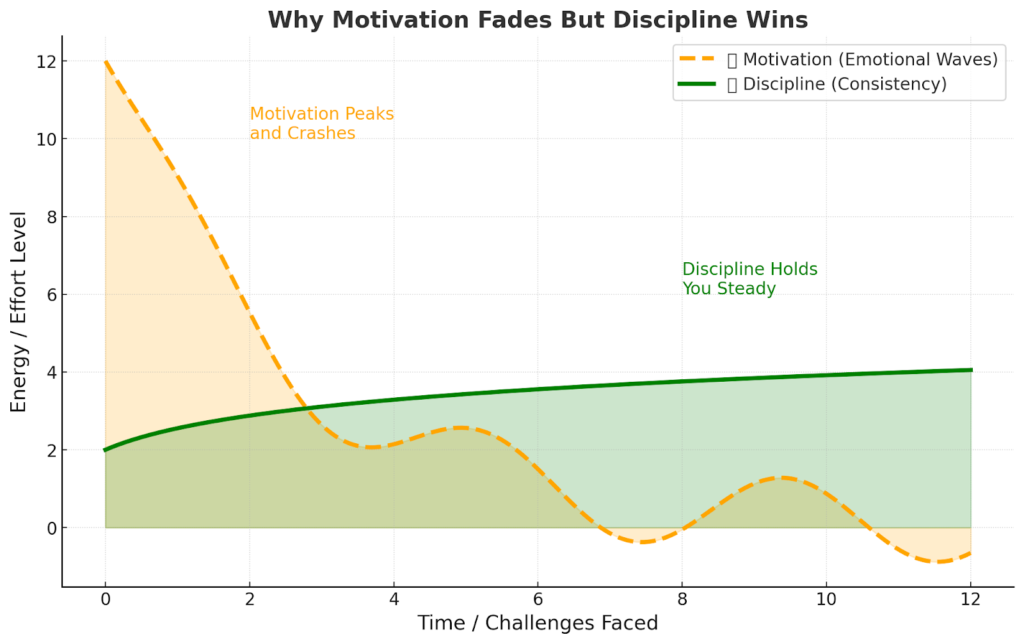
    Research and real-world behavior patterns consistently show that habits, not motivation, drive long-term results. Motivation fluctuates. Habits remain.

    This article explains how to build better daily habits in a practical, repeatable way, without relying on willpower or emotional spikes.


    Why Motivation Is an Unreliable Strategy

    Motivation depends on:

    • Mood
    • Energy level
    • External rewards
    • Short-term excitement

    These variables are unstable. When motivation drops, behavior stops.

    Habits work differently. Once a habit is formed, the action requires less conscious effort, making consistency possible even on low-energy days.

    This is why sustainable change always favors systems over feelings.

    This is also why long-term progress depends more on consistency than bursts of intense effort:
    https://ootssu.com/why-consistency-beats-intensity-in-personal-growth/

    Start With Small, Repeatable Actions

    A common mistake is starting too big:

    • Exercising for 1 hour
    • Writing 2,000 words a day
    • Completely changing a routine overnight

    These goals create resistance.

    Instead, design habits that are:

    • Small enough to repeat daily
    • Clear and measurable
    • Easy to start even when tired

    Example:

    • Instead of โ€œexercise dailyโ€ โ†’ โ€œput on workout clothesโ€
    • Instead of โ€œread moreโ€ โ†’ โ€œread one pageโ€

    Consistency comes from lowering the start cost, not raising discipline.


    Anchor Habits to Existing Routines

    Habits stick better when they are attached to something you already do.

    This is called habit stacking:

    • After brushing teeth โ†’ stretch for 1 minute
    • After making coffee โ†’ write one sentence
    • After opening a laptop โ†’ plan the next task

    The existing routine acts as a trigger, reducing decision fatigue.

    If you want a deeper breakdown of how routines influence focus and productivity, see:
    ๐Ÿ‘‰ https://ootssu.com/how-to-build-a-sustainable-morning-routine-for-focus/


    Focus on Environment, Not Willpower

    Environment silently shapes behavior.

    If the environment makes the habit easy, consistency increases.
    If the environment adds friction, habits collapse.

    Examples:

    • Place a book on your desk instead of your phone
    • Keep unhealthy snacks out of reach
    • Prepare work tools the night before

    Design your surroundings so that the right action is the default action.

    This principle is closely related to better decision-making systems explained here:
    ๐Ÿ‘‰ https://ootssu.com/better-everyday-decisions/


    Track Progress, But Keep It Simple

    Tracking helps, but overtracking becomes a burden.

    Effective habit tracking:

    • Uses binary success (done / not done)
    • Avoids complex metrics
    • Takes less than 10 seconds

    A simple checklist or calendar mark is enough. The goal is reinforcement, not analysis.

    If focus and consistency are recurring challenges, this article complements the approach:
    ๐Ÿ‘‰ https://ootssu.com/deep-focus-techniques-that-actually-work-in-real-life/


    Missed Days Donโ€™t Break Habits โ€” Quitting Does

    Missing a day is normal. Missing two days increases risk.

    The rule:

    • Never miss twice

    Habits are built over weeks, not days. What matters is returning to the routine quickly, without guilt or overcorrection.

    Consistency is about recovery speed, not perfection.


    Final Thoughts

    Better habits are not built through motivation, inspiration, or sudden change.
    They are built through:

    • Small actions
    • Stable triggers
    • Supportive environments
    • Simple tracking

    When habits replace motivation, progress becomes automatic.

    That is how change becomes sustainable.

  • Deep Focus Techniques That Actually Work in Real Life

    Learn practical deep focus techniques that work in real environments. No hacks, no hype, just proven methods.

    Deep focus is not an isolated skill. It is built on consistent daily habits, as outlined in Daily Habits for Focus and Productivity.

    Deep focus techniques in a distraction-free workspace

    Introduction

    Deep focus is not about intensity.
    It is about protecting attention from fragmentation.


    1. Why Focus Breaks So Easily (Fact)

    Modern work environments constantly interrupt working memory.
    Every interruption increases recovery time.


    2. The Only Techniques That Scale (Fact)

    Time-Boxed Focus

    60โ€“90 minute sessions aligned with attention cycles.

    Environment Control

    Notifications off. One screen. One task.

    Defined Finish Line

    Focus improves when the brain knows when to stop.


    3. What Does Not Work (Correction)

    • Forcing longer sessions
    • Relying on motivation
    • Constant tool switching

    4. A Realistic Deep Focus Setup (Practical)

    • Single task list
    • Timer visible
    • Clear end condition

    Conclusion

    Many focus failures originate earlier in the day. Establishing a stable morning routine can significantly reduce these issues, as described in How to Build a Sustainable Morning Routine for Focus.

    Deep focus is designed, not summoned.

  • How to Build a Sustainable Morning Routine for Focus

    A realistic guide to building a morning routine that improves focus without burnout. Backed by behavioral science and practical examples.

    This article is part of a broader framework on how daily habits influence attention and output, explained in Daily Habits for Focus and Productivity.

    Sustainable morning routine for better focus

    Introduction

    A morning routine is not about waking up earlier.
    It is about reducing cognitive friction at the start of the day.

    Well-designed routines eliminate unnecessary decisions and allow focus to emerge naturally.


    1. Why Morning Routines Affect Focus (Fact)

    Focus is weakest during task initiation.
    Morning routines work by preloading decisions, minimizing early-day cognitive load.


    2. What Makes a Routine Sustainable (Fact)

    A routine fails when it:

    • Takes too long
    • Requires high motivation
    • Competes with real-life constraints

    A sustainable routine is:

    • Short
    • Repeatable
    • Context-based

    3. A Minimal Morning Routine Template (Practical)

    Step 1. Fixed Wake Window
    Same 30-minute window daily.

    Step 2. One Non-Negotiable Action
    Example: open task list, review first task.

    Step 3. No Input Rule
    No news, messages, or social media before first focus block.


    4. Common Mistakes (Correction)

    • Copying influencer routines
    • Adding too many steps
    • Expecting immediate results

    Conclusion

    A well-designed morning routine works best when paired with structured focus sessions, which are discussed in Deep Focus Techniques That Actually Work in Real Life.

    Morning routines work when they are boring, predictable, and easy.

  • Daily Habits for Focus and Productivity (Science-Based Guide)

    Learn how daily habits directly affect focus and productivity. Evidence-based strategies, practical routines, and real-world examples you can apply today.

    Daily habits become more effective when they are anchored by a consistent start to the day. A practical example of this approach is explained in How to Build a Sustainable Morning Routine for Focus.

    Daily habits that improve focus and productivity in a minimalist workspace
    A calm workspace illustrating routines that support sustained focus and productive work.

    1. What a Habit Really Is (Fact)

    A habit is an automated behavior triggered by context, not willpower.
    According to behavioral psychology, habits form through a cueโ€“behaviorโ€“reward loop, allowing the brain to conserve energy by reducing decision-making.

    Key implication:
    If focus fails repeatedly, the issue is usually the environment or routine, not discipline.


    2. The Direct Link Between Habits and Focus (Fact)

    Focus depends on three variables:

    1. Cognitive load
    2. Energy consistency
    3. Distraction frequency

    Daily habits influence all three.

    Habit TypeEffect on Focus
    Irregular sleepReduced attention span
    Constant notificationsFragmented working memory
    Consistent start routineFaster entry into deep work
    Scheduled breaksSustained mental stamina

    3. High-Impact Habits That Improve Productivity (Fact)

    These habits show consistent effects across studies and real-world observation.

    Fixed Start Ritual

    Starting work with the same short ritual (e.g., desk setup, checklist review) reduces task-initiation friction.

    Time-Blocked Focus Sessions

    Working in defined blocks (60โ€“90 minutes) aligns with natural attention cycles.

    Single-Task Rule

    Multitasking increases error rates and completion time. Focus improves when tasks are isolated.

    End-of-Day Shutdown

    A deliberate stop routine reduces mental residue and improves next-day focus.


    4. Common Productivity Myths (Correction)

    • Myth: Long hours equal high productivity
      Fact: Output quality declines sharply after sustained mental fatigue.
    • Myth: Motivation must come first
      Fact: Action precedes motivation in habit formation.
    • Myth: Apps solve focus problems
      Fact: Environment design has a larger effect than tools.

    5. A Simple Daily Habit Framework (Practical)

    This framework requires no special tools.

    Morning

    • Fixed start time
    • One priority task defined before checking messages

    Work Blocks

    • 60โ€“90 minutes focus
    • 5โ€“10 minutes recovery

    Evening

    • Review completed work
    • Define tomorrowโ€™s first task
    • Clear workspace

    Consistency matters more than intensity.


    6. Why Small Habits Outperform Big Changes (Fact)

    Behavioral research shows that small, repeatable actions compound over time.
    Large changes fail because they exceed cognitive and emotional capacity.

    If a habit feels too easy, it is correctly sized.

    Once habits are established, protecting attention becomes the next challenge. Specific methods for maintaining uninterrupted attention are covered in Deep Focus Techniques That Actually Work in Real Life.


    Conclusion

    Focus and productivity are not personality traits.
    They are the predictable result of daily habits, reinforced by environment and repetition.

    Improving productivity does not require working harder.
    It requires designing better defaults.

  • Why Motivation Fails and Systems Build Long-Term Focus

    Motivation fades quickly, but systems create lasting focus. Learn why relying on motivation fails and how simple systems support long-term concentration and productivity.

    Why Motivation Is an Unreliable Strategy

    Motivation feels powerful, but it is unstable.
    It depends on mood, energy, sleep, stress, and external circumstances.

    This is why motivation-based productivity collapses after a few days.
    When motivation disappears, focus disappears with it.

    Long-term focus requires something more reliable than emotional energy.

    The Hidden Problem With Relying on Motivation

    Motivation creates two major problems:

    • It delays action until you โ€œfeel readyโ€
    • It turns focus into a daily decision

    Each decision drains mental energy. Over time, resistance increases and consistency breaks.

    This is why people with strong motivation still struggle to stay focused.

    Systems Remove the Need for Willpower

    A system is a pre-decided structure that guides behavior automatically.

    Examples of focus systems:

    • Fixed start times for deep work
    • Defined task sizes and session lengths
    • Clear rules for interruptions
    • Consistent shutdown routines

    When a system exists, action happens even when motivation is low.

    How Systems Support Focus Habits

    Systems reinforce the daily focus habits explained in Daily Focus Habits: A Simple Routine to Stay Concentrated Without Burnout.

    Habits define what you do.
    Systems define when and how you do it.

    Together, they create consistency without mental strain.

    Systems Protect Focus From Environmental Disruption

    Even a good habit fails in a hostile environment.

    Environmental systems reduce friction automatically, as explained in Environmental Factors That Destroy Focus (And How to Fix Them).

    Examples:

    • Phones stored outside the workspace
    • Notification schedules instead of constant alerts
    • Dedicated spaces for focused work

    The environment enforces focus without conscious effort.

    Building a Simple Focus System

    A focus system does not need to be complex.

    Start with three fixed rules:

    1. Same time, same place for focus work
    2. Fixed session length (25โ€“30 minutes)
    3. One defined task outcome per session

    Once established, the system runs even on low-energy days.

    Consistency Beats Intensity

    Short bursts of motivation feel productive but fade quickly.
    Systems produce steady results over time.

    Focus becomes predictable when:

    • Decisions are minimized
    • Friction is removed
    • Behavior is automated

    This is how long-term focus is built.

    The Complete Focus Framework

    Together, these three elements form a stable structure:

    • Habits define daily actions
    • Environment removes distractions
    • Systems ensure consistency

    When combined, focus stops depending on motivation.

    Related Reading

    Systems work best when they are supported by strong habits and a distraction-free environment.

  • Environmental Factors That Destroy Focus (And How to Fix Them)

    Discover the environmental factors that silently destroy focus, from visual clutter to noise and digital interruptions, and learn practical ways to fix them.

    Common environmental distractions that reduce focus and productivity in daily workspaces
    Group of business workers screaming to stressed partner at the office.

    Environmental Factors That Destroy Focus

    Lack of focus is often blamed on motivation or discipline.
    In reality, focus is usually lost because the environment is working against you.

    Even small environmental signals can continuously pull attention away without being noticed. This article explains the most common focus-destroying factors and how to correct them with simple changes.


    Visual Clutter Overloads the Brain

    The brain processes everything in view, even when you try to ignore it.

    Common sources of visual distraction:

    • Papers, notebooks, and devices spread across the desk
    • Open browser tabs unrelated to the task
    • Decorative objects within direct sight

    Each visible item competes for attention and increases mental fatigue.

    Fix
    Before starting, leave only:

    • One primary work tool
    • One support item (notes or document)

    Minimal visibility reduces cognitive load immediately.


    Noise Disrupts Deep Attention

    Background noise may feel manageable, but it constantly interrupts deep focus.

    Problematic noise includes:

    • Conversations
    • Notifications and alerts
    • Irregular sounds (doors, footsteps, traffic)

    The brain reacts to unpredictable sound patterns, even at low volume.

    Fix

    • Use noise-canceling headphones or earplugs
    • Play consistent ambient sound if silence is impossible
    • Schedule focus work during quieter hours

    Poor Lighting Reduces Mental Energy

    Lighting affects alertness more than most people realize.

    Common issues:

    • Dim rooms
    • Harsh overhead lighting
    • Strong backlighting from windows

    Poor lighting increases eye strain and reduces concentration over time.

    Fix

    • Use soft, indirect lighting
    • Position light sources beside or behind screens
    • Adjust brightness to match the time of day

    Digital Interruptions Break Focus Cycles

    Phones and notifications are among the most powerful focus disruptors.

    Even when not checked, alerts create anticipation and mental fragmentation.

    Fix

    • Keep phones out of sight during focus sessions
    • Allow notifications only at scheduled intervals
    • Disable non-essential alerts permanently

    This supports the habit-based focus routine explained in
    <a href=”https://ootssu.com/daily-focus-habits-routine/”>Daily Focus Habits: A Simple Routine to Stay Concentrated Without Burnout</a>.


    Unclear Work Boundaries Encourage Distraction

    Working in spaces shared with leisure activities confuses the brain.

    Examples:

    • Studying on the bed
    • Working on the couch
    • Mixing entertainment and work devices

    The environment signals relaxation instead of focus.

    Fix

    • Assign one location for focused work
    • Avoid entertainment in that space
    • End sessions with a clear shutdown routine

    Designing an Environment That Supports Focus

    Focus improves when the environment removes friction instead of adding it.

    Key principles:

    • Reduce visual input
    • Control sound patterns
    • Stabilize lighting
    • Separate work from leisure

    Small adjustments consistently outperform willpower.

    Related Reading

    Fixing your environment becomes far more effective when combined with strong habits and reliable systems.

  • Daily Focus Habits: A Simple Routine to Stay Concentrated Without Burnout

    Learn practical daily focus habits that actually work. This guide explains why concentration breaks down and how to build a simple routine to stay focused without burnout.

    A clean and minimal workspace designed to support daily focus habits and deep work

    Daily Focus Habits That Actually Work

    Staying focused every day is not about motivation or willpower.
    In most cases, focus collapses because the environment and routine are poorly designed.

    When distraction becomes the default, concentration must be rebuilt through repeatable habits, not effort.

    This article explains why focus breaks down and presents a simple daily routine that can be applied immediately to work or study.


    Why Focus Fails in Daily Life

    Loss of focus usually comes from structural issues, not personal weakness.

    The most common causes are:

    • Constant notification-driven interruptions
    • Vague or oversized tasks
    • No clear starting or stopping points
    • Mental fatigue caused by decision overload

    Without a system, the brain switches to short-term rewards and abandons sustained attention.


    Habit 1. Start With One Clear Outcome

    Before beginning any task, define one concrete outcome.

    Examples:

    • โ€œWrite the introduction paragraphโ€
    • โ€œFinish slides 1โ€“5โ€
    • โ€œReview and summarize one documentโ€

    Avoid goals like โ€œwork on thisโ€ or โ€œstudy for a while.โ€
    Clear outcomes reduce hesitation and make starting easier.


    Habit 2. Limit Focus Sessions to 25โ€“30 Minutes

    Long focus sessions sound productive but often lead to mental exhaustion.

    A better structure:

    • 25โ€“30 minutes of focused work
    • 5 minutes of complete rest
    • No screen usage during breaks

    Short sessions lower resistance and make it easier to restart after interruptions.


    Habit 3. Remove Visual Distractions First

    Visual clutter increases cognitive load, even when ignored.

    Before starting:

    • Keep only one primary tool on your desk
    • Remove unrelated objects from sight
    • Close unused browser tabs

    The goal is not perfect cleanliness, but reducing visual choices.


    Habit 4. Schedule Distractions Instead of Blocking Them

    Completely disabling notifications can increase anxiety and reduce focus.

    A better approach is controlled access.

    Example schedule:

    • Messages: once every hour
    • Email: two fixed times per day

    When the brain knows interruptions are allowed later, it stays focused now.


    Habit 5. End With a Shutdown Routine

    Ending properly improves the next focus session.

    Use one minute to:

    • Write down the next task
    • Save files and notes
    • Close the workspace intentionally

    This reduces friction when returning to the task later.


    A Sustainable Focus Routine

    Daily focus is not about forcing attention.
    It is the result of a routine that removes friction and limits unnecessary decisions.

    Small, repeatable habits outperform motivation in the long run.

    Focus becomes reliable when the system supports it.

    If you find it difficult to stay focused even with good habits,
    your environment may be working against you. This article explains
    the hidden factors that silently break concentration:

    Environmental Factors That Destroy Focus (And How to Fix Them)

    Related Reading

    Good habits alone are not always enough. Your environment and systems also play a critical role in sustaining focus over time.

  • Introduction

    Have you ever reached the end of the day feeling mentally exhausted, even if nothing โ€œbigโ€ happened?

    Often, the fatigue doesnโ€™t come from hard work.
    It comes from too many small decisions.

    What to eat.
    What to reply.
    What to prioritize.
    What to ignore.

    This mental overload has a name: decision fatigue.

    Understanding and reducing decision fatigue is one of the most practical ways to make better everyday decisions without relying on willpower alone.


    What Is Decision Fatigue?

    Decision fatigue happens when your brain becomes tired from making too many choices in a short period of time.

    As mental energy decreases, we tend to:

    • Delay decisions
    • Choose the easiest option, not the best one
    • Rely on habits, even bad ones

    This explains why people:

    • Order unhealthy food at night
    • Avoid important conversations
    • Procrastinate on meaningful work

    Better decisions donโ€™t come from more effort.
    They come from fewer unnecessary choices.


    Why Reducing Choices Improves Decision Quality

    Simplifying choices doesnโ€™t reduce freedom.
    It protects mental clarity.

    When fewer decisions compete for attention:

    • Important choices become clearer
    • Stress decreases
    • Consistency improves

    Research in decision psychology shows that repeated small decisions shape long-term outcomes.
    (Source: Harvard Business Review)

    This idea connects closely with the foundation explained in
    ๐Ÿ‘‰ How to Make Better Everyday Decisions Based on Real Experience


    Practical Ways to Reduce Decision Fatigue

    1. Create Default Options

    Decide once, reuse often.

    Examples:

    • Rotate simple meals during weekdays
    • Set fixed workout days
    • Use the same morning routine

    Defaults free your mind for decisions that truly matter.


    2. Limit Information Intake

    More information doesnโ€™t equal better decisions.

    Try:

    • Following fewer news sources
    • Setting specific times for social media
    • Avoiding โ€œjust one more articleโ€

    Clarity improves when noise decreases.


    3. Decide Effort Levels in Advance

    Not every decision deserves equal attention.

    Ask yourself:

    • Is this reversible?
    • Will this matter in a week?

    If not, decide quickly and move on.


    Build Systems, Not Willpower

    Willpower is unreliable.
    Systems are consistent.

    Instead of asking:

    โ€œCan I make the right decision today?โ€

    Ask:

    โ€œCan I design today so fewer decisions are required?โ€

    Over time, simple systems quietly outperform motivation.


    Final Thoughts

    Decision fatigue affects everyone.
    But it doesnโ€™t have to control your life.

    By reducing unnecessary choices, you protect your attention, energy, and long-term clarity.

    Small adjustments, repeated daily, lead to better outcomes without mental strain.

  • Learning From Mistakes: Turning Daily Decisions Into Experience

    Mistakes are uncomfortable.
    They expose gaps between intention and outcome.

    But mistakes also contain something advice never does: direct feedback.

    When you learn how to extract meaning from mistakes, everyday decisions stop feeling random.
    They begin to accumulate into experience.

    A reflective moment representing learning from mistakes and turning daily decisions into real experience

    Why Mistakes Feel Worse Than They Are

    Most mistakes arenโ€™t catastrophic.
    They feel worse because they challenge our expectations.

    We often assume:

    • Good intentions should lead to good outcomes
    • Effort should always be rewarded
    • Smart decisions should work immediately

    Reality disagrees.

    Mistakes highlight the difference between theory and lived experience.


    Mistakes vs. Failure

    Not all mistakes are failures.

    A failure ends a path.
    A mistake reveals information.

    The problem isnโ€™t making mistakes.
    Itโ€™s repeating them without reflection.

    When mistakes are ignored, they stay painful.
    When examined, they become useful.


    How Reflection Turns Mistakes Into Experience

    Experience doesnโ€™t come from time alone.
    It comes from processing what happened.

    Effective reflection asks:

    • What decision led here?
    • What assumption was wrong?
    • What signal did I miss?

    This process transforms confusion into clarity.

    Over time, it sharpens everyday decision making.


    Small Mistakes Are the Best Teachers

    Large failures overwhelm.
    Small mistakes educate.

    Daily decisions offer frequent, low-risk feedback:

    • A poor time choice
    • An unnecessary purchase
    • A rushed response

    Each one provides data.

    Handled calmly, these moments accumulate into judgment.


    Turning Experience Into Better Everyday Decisions

    Mistakes donโ€™t guarantee improvement.
    Reflection does.

    Thatโ€™s why experience matters more than advice alone.

    If you want to see how experience, reflection, and small choices connect into a practical framework, this guide on making better everyday decisions based on real experience explains the foundation in detail.


    Progress Comes From Paying Attention

    Better decisions donโ€™t come from avoiding mistakes.
    They come from learning faster.

    When mistakes are treated as information, not identity, growth becomes steady.

    Experience builds quietly.
    One decision at a time.

OO
OOTSSU Apps 16 iPhone apps โ†—
All Apps