Motivation fades quickly, but systems create lasting focus. Learn why relying on motivation fails and how simple systems support long-term concentration and productivity.
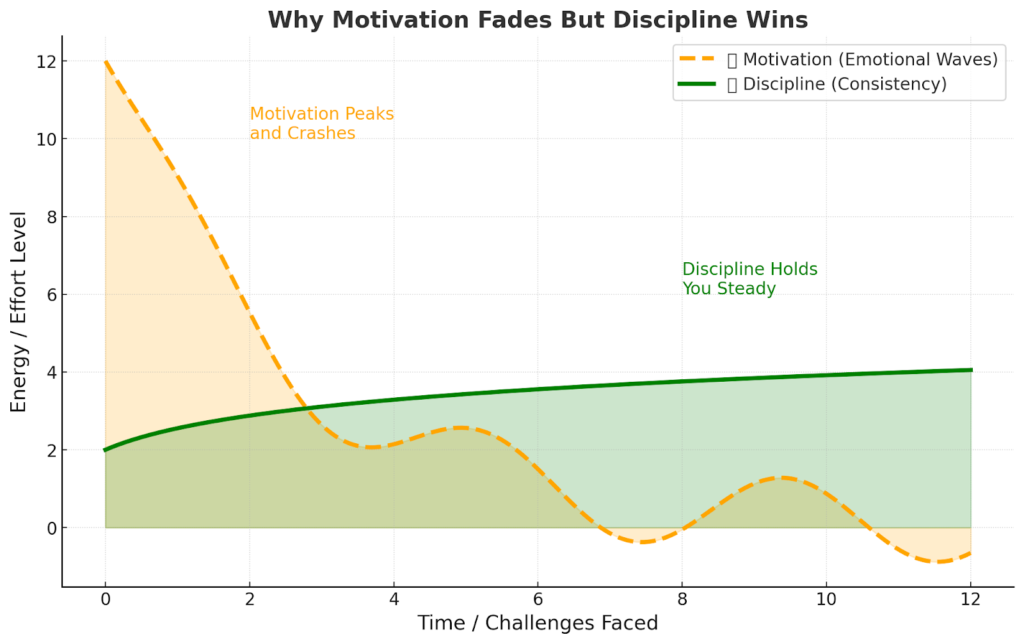
Why Motivation Is an Unreliable Strategy
Motivation feels powerful, but it is unstable.
It depends on mood, energy, sleep, stress, and external circumstances.
This is why motivation-based productivity collapses after a few days.
When motivation disappears, focus disappears with it.
Long-term focus requires something more reliable than emotional energy.
The Hidden Problem With Relying on Motivation
Motivation creates two major problems:
- It delays action until you “feel ready”
- It turns focus into a daily decision
Each decision drains mental energy. Over time, resistance increases and consistency breaks.
This is why people with strong motivation still struggle to stay focused.
Systems Remove the Need for Willpower
A system is a pre-decided structure that guides behavior automatically.
Examples of focus systems:
- Fixed start times for deep work
- Defined task sizes and session lengths
- Clear rules for interruptions
- Consistent shutdown routines
When a system exists, action happens even when motivation is low.
How Systems Support Focus Habits
Systems reinforce the daily focus habits explained in Daily Focus Habits: A Simple Routine to Stay Concentrated Without Burnout.
Habits define what you do.
Systems define when and how you do it.
Together, they create consistency without mental strain.
Systems Protect Focus From Environmental Disruption
Even a good habit fails in a hostile environment.
Environmental systems reduce friction automatically, as explained in Environmental Factors That Destroy Focus (And How to Fix Them).
Examples:
- Phones stored outside the workspace
- Notification schedules instead of constant alerts
- Dedicated spaces for focused work
The environment enforces focus without conscious effort.
Building a Simple Focus System
A focus system does not need to be complex.
Start with three fixed rules:
- Same time, same place for focus work
- Fixed session length (25–30 minutes)
- One defined task outcome per session
Once established, the system runs even on low-energy days.
Consistency Beats Intensity
Short bursts of motivation feel productive but fade quickly.
Systems produce steady results over time.
Focus becomes predictable when:
- Decisions are minimized
- Friction is removed
- Behavior is automated
This is how long-term focus is built.
The Complete Focus Framework
Together, these three elements form a stable structure:
- Habits define daily actions
- Environment removes distractions
- Systems ensure consistency
When combined, focus stops depending on motivation.
Related Reading
Systems work best when they are supported by strong habits and a distraction-free environment.