Learn how daily habits directly affect focus and productivity. Evidence-based strategies, practical routines, and real-world examples you can apply today.
Daily habits become more effective when they are anchored by a consistent start to the day. A practical example of this approach is explained in How to Build a Sustainable Morning Routine for Focus.
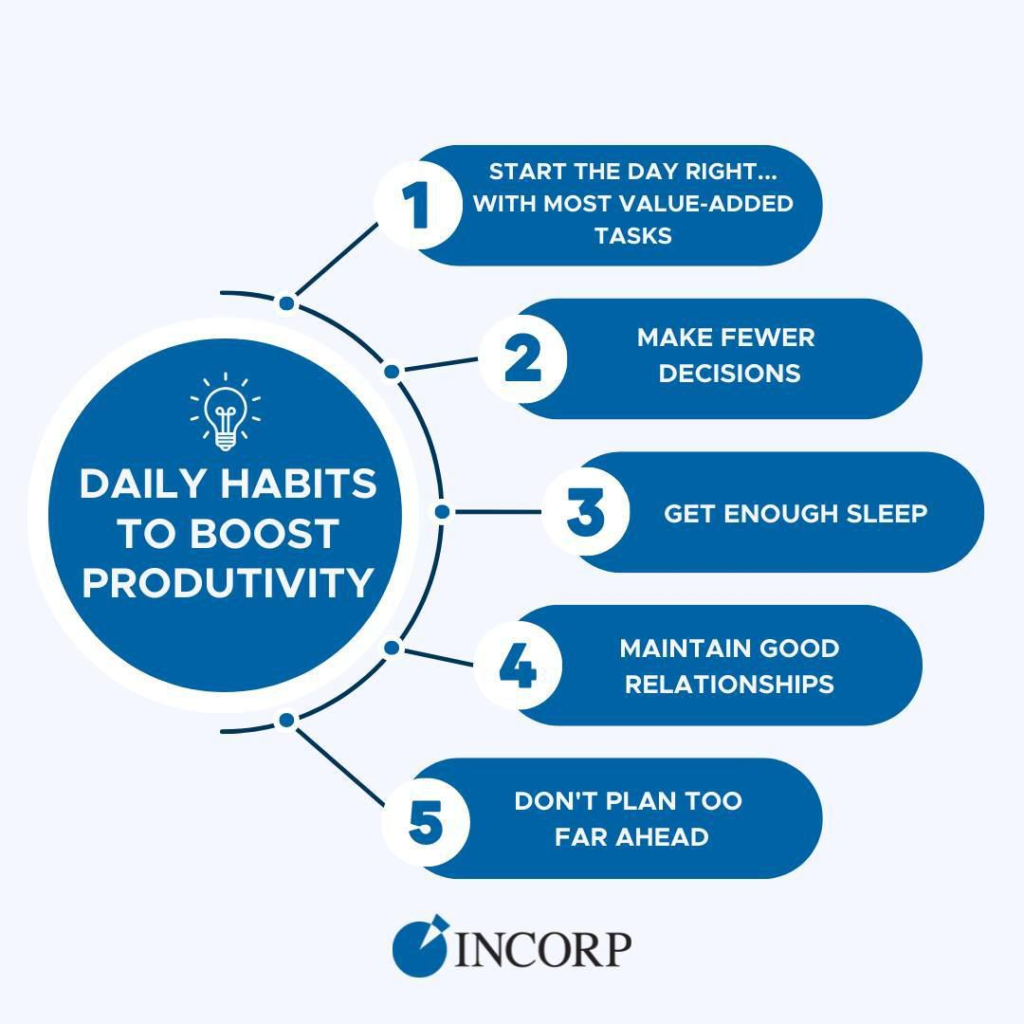
1. What a Habit Really Is (Fact)
A habit is an automated behavior triggered by context, not willpower.
According to behavioral psychology, habits form through a cue–behavior–reward loop, allowing the brain to conserve energy by reducing decision-making.
Key implication:
If focus fails repeatedly, the issue is usually the environment or routine, not discipline.
2. The Direct Link Between Habits and Focus (Fact)
Focus depends on three variables:
- Cognitive load
- Energy consistency
- Distraction frequency
Daily habits influence all three.
| Habit Type | Effect on Focus |
|---|---|
| Irregular sleep | Reduced attention span |
| Constant notifications | Fragmented working memory |
| Consistent start routine | Faster entry into deep work |
| Scheduled breaks | Sustained mental stamina |
3. High-Impact Habits That Improve Productivity (Fact)
These habits show consistent effects across studies and real-world observation.
Fixed Start Ritual
Starting work with the same short ritual (e.g., desk setup, checklist review) reduces task-initiation friction.
Time-Blocked Focus Sessions
Working in defined blocks (60–90 minutes) aligns with natural attention cycles.
Single-Task Rule
Multitasking increases error rates and completion time. Focus improves when tasks are isolated.
End-of-Day Shutdown
A deliberate stop routine reduces mental residue and improves next-day focus.
4. Common Productivity Myths (Correction)
- Myth: Long hours equal high productivity
Fact: Output quality declines sharply after sustained mental fatigue. - Myth: Motivation must come first
Fact: Action precedes motivation in habit formation. - Myth: Apps solve focus problems
Fact: Environment design has a larger effect than tools.
5. A Simple Daily Habit Framework (Practical)
This framework requires no special tools.
Morning
- Fixed start time
- One priority task defined before checking messages
Work Blocks
- 60–90 minutes focus
- 5–10 minutes recovery
Evening
- Review completed work
- Define tomorrow’s first task
- Clear workspace
Consistency matters more than intensity.
6. Why Small Habits Outperform Big Changes (Fact)
Behavioral research shows that small, repeatable actions compound over time.
Large changes fail because they exceed cognitive and emotional capacity.
If a habit feels too easy, it is correctly sized.
Once habits are established, protecting attention becomes the next challenge. Specific methods for maintaining uninterrupted attention are covered in Deep Focus Techniques That Actually Work in Real Life.
Conclusion
Focus and productivity are not personality traits.
They are the predictable result of daily habits, reinforced by environment and repetition.
Improving productivity does not require working harder.
It requires designing better defaults.